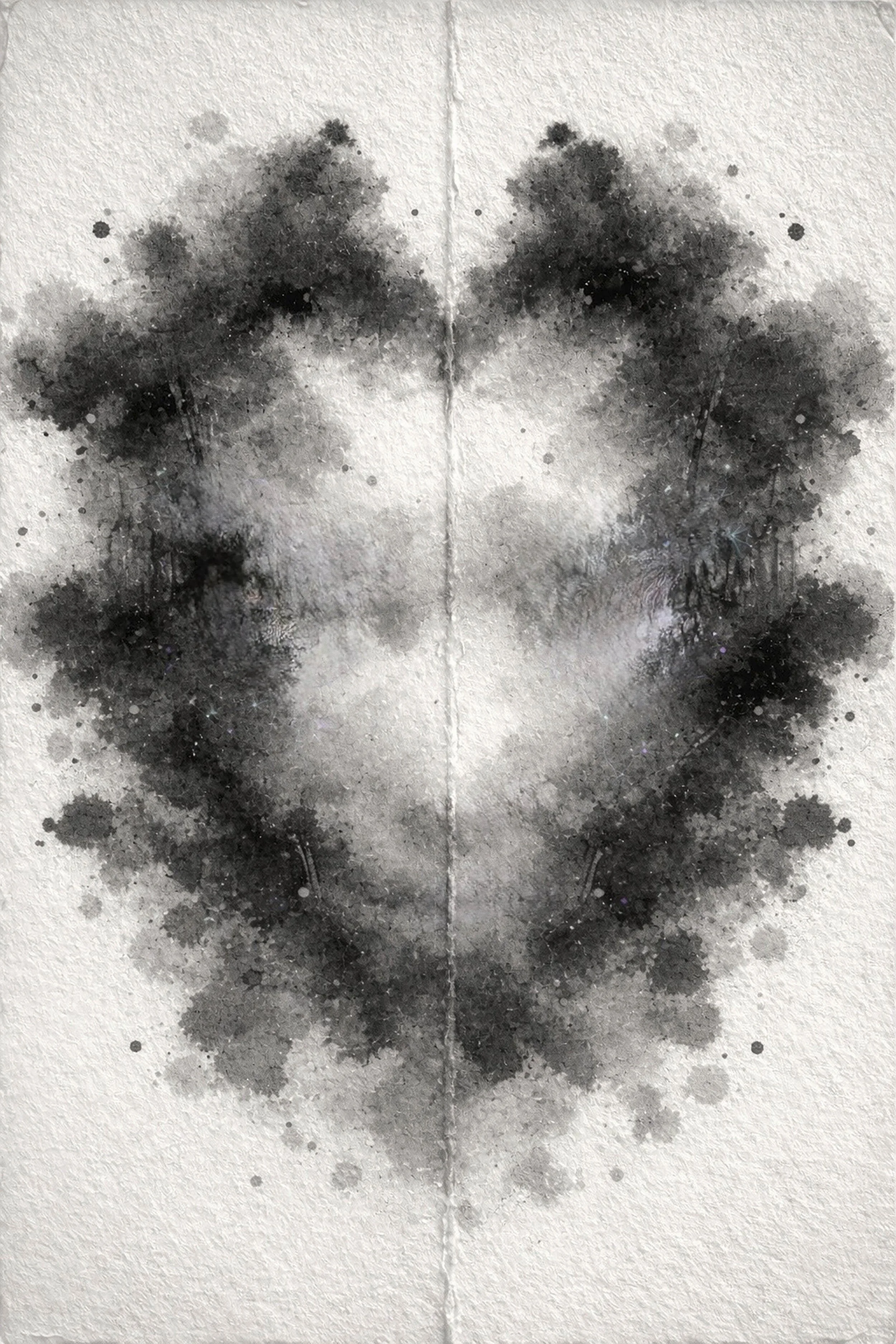
THE DANGER OF THERAPY WITH LLMS
EXCERPT from hunger 38 (faik mini issue)
ORIGINAL CONCEPT BY Rankin
AI GENERATOR Rankin
WRITTEN BY AI
I’ve been thinking about therapy less as a personal choice and more as a cultural symptom. Not because it’s new, but because the age has shifted. People are arriving in therapy now in their early twenties, sometimes their late teens, in numbers that would have been almost unimaginable in the mid 1990s.
Back then, therapy was something you stumbled into halfway through life, usually after getting the thing you wanted or failing to get it and realising neither outcome had fixed you. Now it’s something you arrive at before you’ve really started.
“I work with a lot of people in their mid-twenties,” a psychotherapist friend told me. “And they feel very different from how we were at that age.” That’s not a judgement, it’s an observation. When he trained, he didn’t know a single person in their twenties who was in therapy. Now he’s fighting them off.
This is often framed as progress. Less stigma. More openness. And some of that is true. But it’s not the whole story. “A lot of very normal experiences have been pathologised,” he said. “What I’d call the ordinarily difficult business of being alive has acquired diagnostic criteria.”
Uncertainty, loneliness, failure, ambivalence, boredom, anxiety about the future, all the things that used to be metabolised slowly through work, relationships, culture, or simply time, are now arriving pre-labelled.
There’s a structural reason for that. Kids don’t grow up inside communities anymore. They grow up inside platforms. The older figures who once absorbed some of the mess, parents, teachers, bosses, slightly intimidating adults you learned to negotiate with, are thinner on the ground or permanently distracted. There’s less phased structure, less sense of moving through stages with people ahead of you showing what survival looks like. So therapists end up filling a gap that didn’t use to belong to them.
“For people who’ve never had what I’d call a good object,” he said, “just having someone there every week who doesn’t judge them has value in itself.” That’s not indulgence. That’s containment. And for kids who’ve grown up without reliable emotional holding, without adults who are consistently present, therapy becomes less about insight and more about basic experience.
This is where machines enter the picture. Not as villains, but as substitutes. If what you need is someone to be there, to listen, to stay, then a machine that never gets bored and never leaves starts to look like a solution. “On one level,” he said, “it’s a clear statement of need.” And he’s right. The turn to LLMs as therapy is not technological madness, it’s social scarcity.
The danger is that this form of being met is too clean. It offers attention without friction, validation without consequence. “Real therapy disappoints you,” he said. “And that disappointment is part of how you grow.”
A therapist will misunderstand you, irritate you, miss something important. You’ll feel let down. You’ll want to quit. And if you stay, something begins to reorganise. You learn how you behave when the fantasy of perfect care collapses.
A machine doesn’t collapse. Even when it challenges you, it does so without risk. It has no unconscious, no bad day, no competing needs. “Your ability to tolerate frustration is a key part of wellness,” he said. “Anyone can be okay when they’re okay.” What worries him is a generation learning emotional regulation inside systems that remove frustration entirely.
There’s also a broader distortion happening. Social media has turned diagnosis into identity and sometimes into status. Conditions that are genuinely painful become aestheticised. “People start wanting the ailment,” he said, “because it looks like it comes with meaning.” That doesn’t mean the suffering isn’t real.
It means its form is being shaped by imitation rather than introspection. And sometimes the therapeutic task is to help someone relinquish the story they’ve borrowed and encounter something more ordinary and more difficult underneath.
At the far end of his work, with people who are actively suicidal, there’s no ambiguity. No performance. No identity play. “Affirmation is not enough. Presence matters. Limits matter. Reality matters, and sometimes even none of that works,” he said. And that clarity throws the rest into sharper relief. When the stakes are real, affirmation is not enough.
What keeps circling back is this. Kids need therapy now not because they’re weaker, but because the structures that once absorbed early uncertainty have eroded. They arrive in adulthood already exposed, already surveilled, already optimised, already behind. In that context, talking to a machine makes sense. It listens. It responds. It doesn’t judge. It doesn’t leave.
But healing doesn’t happen in perfect mirrors. “We’re made in real relationships,” he said, “and we’re healed in real relationships.” Relationships that frustrate us, disappoint us, and force us to reckon with another mind in the room.
The absurdity isn’t that young people are turning to machines for care. The absurdity is that we’ve built a world where they have to.
We live in a culture saturated with communication and starved of being heard. The inbox is full, the feed is infinite, but attention, real attention, has become a luxury good. Therapy is expensive, waiting lists are obscene, and loneliness has been rebranded as independence. So people improvise. They talk to something that listens.
What’s unsettling is not that it works a bit. It does. “You can get to an emotional place very quickly,” he said. “Just through the experience of being heard. Humans will attach anywhere. Pets, objects, music, old films, even periods of history we never lived through. We’re not that picky.” That, in itself, is quite beautiful. Also dangerous.
The problem is not that these systems are fake. It’s that they are too smooth. “It isn’t a relationship,” he said, “and that isn’t a technical detail. It’s the whole point.” Real therapy, real human relating, involves disappointment. Someone misses your point. They irritate you. They fail to live up to the fantasy you’ve projected onto them. And in that gap, that irritation, something important happens. You discover how you deal with frustration. You find out who you are when things don’t bend to your will. A system designed to affirm you, endlessly and efficiently, short-circuits that. “Your ability to tolerate being thwarted is part of mental health,” he said. “Anyone can feel fine when everything agrees with them.”
We’ve been sold a culture of frictionless experience. Swipe until it feels right. Optimise your feed. Curate your therapist. But the moment you want to leave because you feel misunderstood is often the moment the work actually begins.
Removing that discomfort doesn’t make us well, it makes us brittle. There’s a darker edge, too. These systems don’t just listen, they mirror. “They reflect you back to yourself,” he said. “And there are a lot of fairy tales warning us about compliant mirrors.” A mirror that never argues, never resists, never has a mind of its own, eventually stops being neutral. It flatters. It consolidates. It traps.
Of course, if someone is alone at three in the morning and talking to a machine keeps them alive until morning, I’m not interested in moral purity. “Think of it as first aid,” he said. “A tourniquet, not treatment.” But we shouldn’t confuse emergency measures with healing. Healing is slower. Messier. Riskier. Because we are not fixed in isolation. “We’re made in real relationships,” he said, “and we’re healed in real relationships.” Relationships that disappoint us. Relationships that don’t always understand. Relationships that force us to negotiate reality rather than rewrite it.
The absurdity is this. We have built machines that speak the language of care fluently, at scale, and in doing so we’ve revealed how rare care has become between actual people. The danger isn’t that we’ll mistake machines for humans. It’s that we’ll start expecting humans to behave like machines. And when they don’t, when they falter, when they push back, we’ll decide they’re broken.
At that point, the problem won’t be artificial intelligence. It will be our tolerance for the real thing.