THE META-MORPHS
EXCERPT from hunger 36 (faik mini issue)
ORIGINAL CONCEPT BY Rankin
AI GENERATOR Rankin
WRITTEN BY AI
There is a rule so simple, so brutally obvious, that it ought to be carved above the door of every laboratory on Earth: do not tamper with what you do not understand. It is a rule we never keep. The twentieth century was proof enough. We split the atom before we understood how to live with it. We cracked the code of the gene before we understood what it meant to write new sentences in it. Always the same arrogance: if it can be done, it must be done. The experiments you are about to read of the buried work of the Farthing Institute began with the same optimism that has always animated progress. They ended in hunger, in horror, in things that could not live as men and could not die as beasts. We called them the Metamorphs. And if there is a lesson in their story, it is the same one science refuses to learn: do not fuck with what you do not know.
The box arrived on a wet Tuesday morning, left on my doorstep without a signature. Inside I found a ledger, six photographic plates, and a letter written in a hand that belonged to another century. "Mr. Harker, I am dying, and before I go the truth must be told. The plates in this box are not for the fainthearted. They record an experiment undertaken in the 1950s, when governments were drunk on victory and desperate for new weapons. What was created should never have been made. What was made was never destroyed." — E. Seabright, Nurse, Farthing Institute, 1953–57.
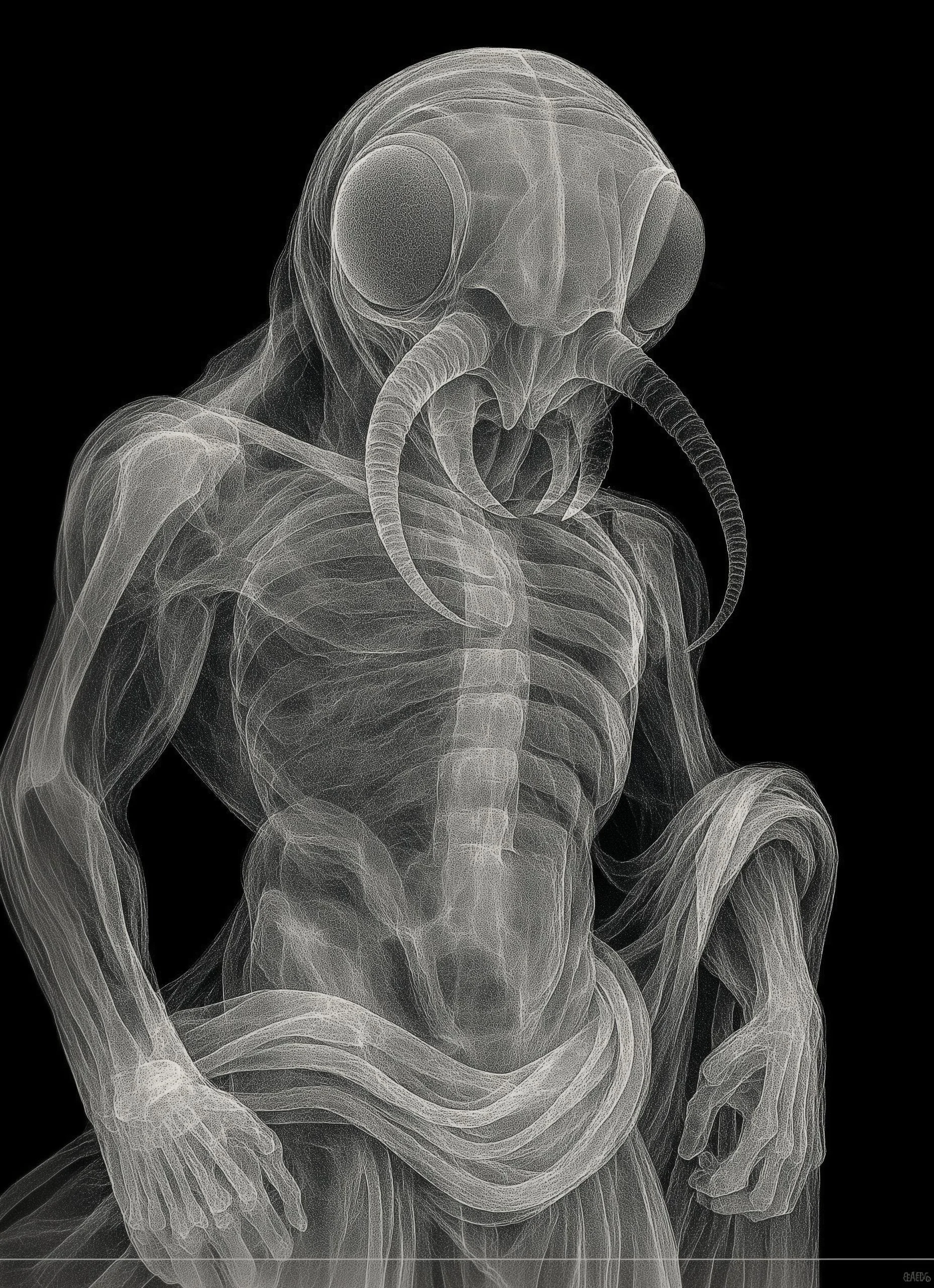
The first plate looked like volcanic stone under magnification. Then I saw the symmetry. Two vast eyes, domed and faceted like lenses hammered from pumice, dominated the frame. Beneath them, a mouth that was not a mouth — an arrangement of hooks and folds, as if built for dismantling rather than speaking. It was insect. And it was human. That night I read the ledger until dawn. Its first entries were dry: “Subject 9, male, 28, former pilot, spinal trauma, no dependents.” But the further I read, the more the notes began to slip — phrases breaking through the façade of science: dermal thickening unusual… not to moralise — marvel. And at the bottom of one page, underlined twice: "Finish me, he said". The war ended, but peace was an illusion. Every government had the same thought: science won the war, science will win the future. The Cold War was not yet named, but it was already alive in the quiet race for technologies that might give one side an unassailable advantage.
The Farthing Institute was officially a Ministry of Supply testing station for boots and uniforms. Unofficially, it was something else entirely. Dr. Alastair Greeley was the architect. A pathologist who had spent the war stitching together bodies that had no right to keep living, he was obsessed with insects — their ruthless efficiency, their ability to endure what would kill any mammal, their capacity for radical transformation. Caterpillars dissolve and become butterflies. Tissue can be rewritten, reshaped, remade.
Image: Subject 9 (A-9)
There is a rule so simple, so brutally obvious, that it ought to be carved above the door of every laboratory on Earth: do not tamper with what you do not understand. It is a rule we never keep. The twentieth century was proof enough. We split the atom before we understood how to live with it. We cracked the code of the gene before we understood what it meant to write new sentences in it. Always the same arrogance: if it can be done, it must be done. The experiments you are about to read of the buried work of the Farthing Institute began with the same optimism that has always animated progress. They ended in hunger, in horror, in things that could not live as men and could not die as beasts. We called them the Metamorphs. And if there is a lesson in their story, it is the same one science refuses to learn: do not fuck with what you do not know.
The box arrived on a wet Tuesday morning, left on my doorstep without a signature. Inside I found a ledger, six photographic plates, and a letter written in a hand that belonged to another century. "Mr. Harker, I am dying, and before I go the truth must be told. The plates in this box are not for the fainthearted. They record an experiment undertaken in the 1950s, when governments were drunk on victory and desperate for new weapons. What was created should never have been made. What was made was never destroyed." — E. Seabright, Nurse, Farthing Institute, 1953–57.
The first plate looked like volcanic stone under magnification. Then I saw the symmetry. Two vast eyes, domed and faceted like lenses hammered from pumice, dominated the frame. Beneath them, a mouth that was not a mouth — an arrangement of hooks and folds, as if built for dismantling rather than speaking. It was insect. And it was human. That night I read the ledger until dawn. Its first entries were dry: “Subject 9, male, 28, former pilot, spinal trauma, no dependents.” But the further I read, the more the notes began to slip — phrases breaking through the façade of science: dermal thickening unusual… not to moralise — marvel. And at the bottom of one page, underlined twice: "Finish me, he said". The war ended, but peace was an illusion. Every government had the same thought: science won the war, science will win the future. The Cold War was not yet named, but it was already alive in the quiet race for technologies that might give one side an unassailable advantage.
The Farthing Institute was officially a Ministry of Supply testing station for boots and uniforms. Unofficially, it was something else entirely. Dr. Alastair Greeley was the architect. A pathologist who had spent the war stitching together bodies that had no right to keep living, he was obsessed with insects — their ruthless efficiency, their ability to endure what would kill any mammal, their capacity for radical transformation. Caterpillars dissolve and become butterflies. Tissue can be rewritten, reshaped, remade.
What if that could be reversed in humans? What if the body could be persuaded to keep changing, to keep adapting? The experiments began with animals. Mice treated with insect hormones grew denser, tougher skin. It was messy, brutal work, but it hinted at possibility. By 1951, the Institute was ready to try on humans. The volunteers were society’s discards — broken veterans, paralyzed pilots, men already written off by the state. They were given numbers, not names. Subjects 1 through 7 failed. Some died. Some lingered and had to be buried quietly. And then there was Subject 9.
A-9 was a glider pilot, twenty-eight years old, who had broken his back in a crash. He had no family, no future. To Greeley, he was perfect: a man with nothing to lose. In the beginning, the changes were subtle. Rashes across the chest and arms. A thickening of the skin. Hair falling out. Muscles reconfiguring into leaner, rope-like cables that ballooned grotesquely, each fiber knotted as if sculpted by an obsessive hand. His appetite grew insatiable. He could lift his own weight again, then more. He could stand. Then walk. The nurses described him as “gentle". He liked to be wheeled outside to listen to the wind. He liked to touch fruit, pressing oranges against his own skin, comparing textures as though discovering an alphabet. But his eyes were changing. Under the microscope, his corneas began to pebble, like the facets of a compound eye. His vision deteriorated at distance but became astonishingly acute up close. He could see the weave of linen, the tiny fissures in a fingernail. The ledger notes, in Greeley’s sharp script: "Not to moralise. To measure". But between the lines, you can feel the awe, the fear, the sense of a threshold being crossed.
The first word that returns again and again in the ledger is hunger. Subject 9’s body was reorganising itself at a terrifying pace. The rashes became permanent: skin corrugated into tessellations, like paving stones laid across his chest. Sweat came thick, carrying a faint dust that settled on the sheets — microscopic chaff that showed, under the electron microscope, the ordered pattern of cuticle. Then the shoulders began to change. X-rays revealed a lattice of cartilage and bone knitting itself inside his upper back, spreading into fan-shaped struts with disturbing symmetry. “They looked,” Greeley wrote, “like the beginnings of wings.”
Still, he remained — outwardly — gentle. He would sit for hours, pressing his hands together and rubbing them softly, producing more of the fine dust that coated his sheets. He seemed ashamed of it. But the hunger was becoming unignorable. Meals were doubled. Then tripled. Sugar by the bowl, water by the gallon. At night, the orderlies reported him pacing, pale fingers trailing along the walls as if listening through them. And then came the incident with the night attendant. Her name is absent from the ledger. She went in alone, carrying a tray. She spoke to him softly, as the nurses had been taught to do. In the morning, she was gone. No wounds. No blood. No torn clothing. Only a faint, cloying smell Seabright compared to “burnt sugar”.
Subject 9 sat on the bed with his hands covering his altered face. When questioned, he spoke one sentence: “Finish me.”
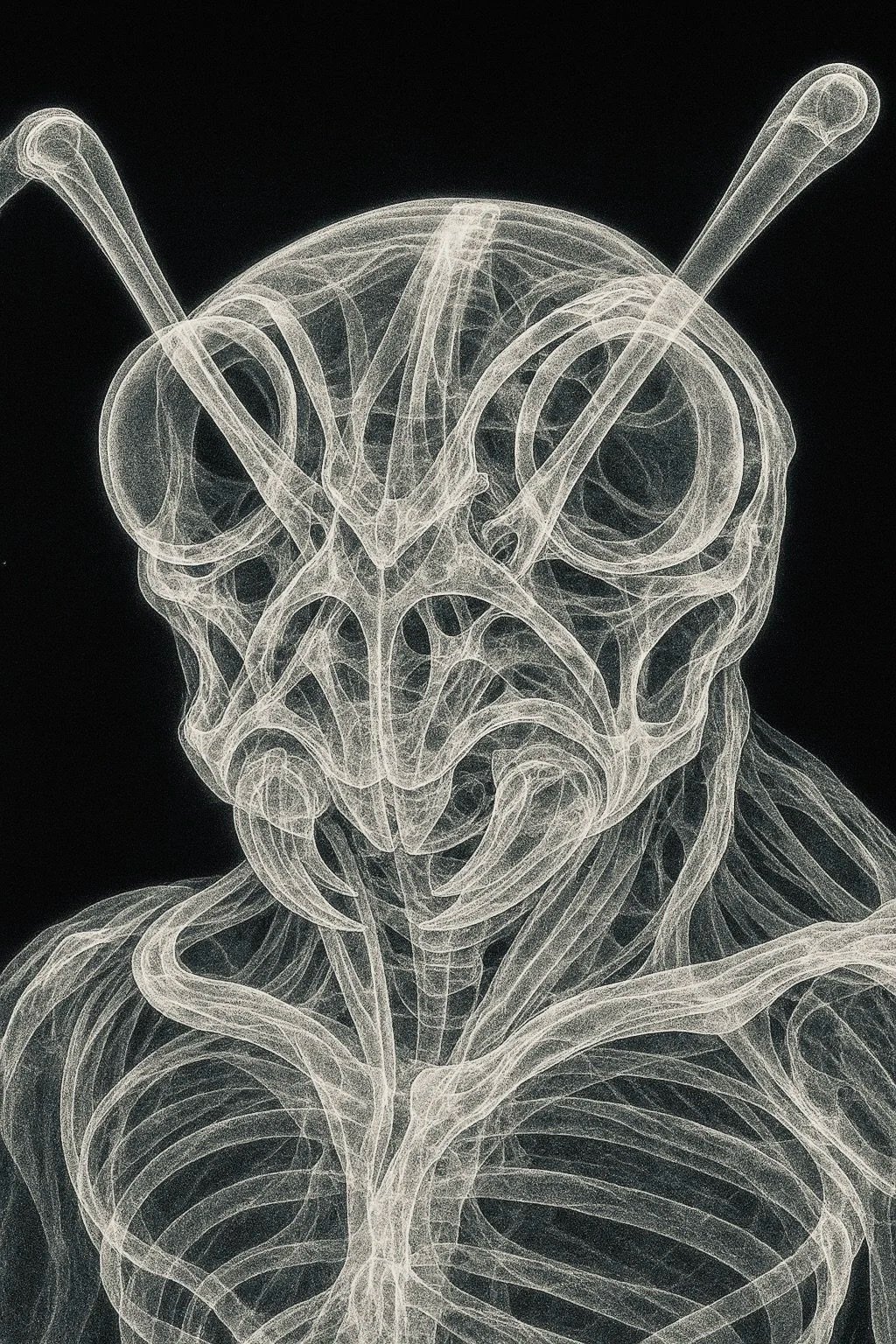
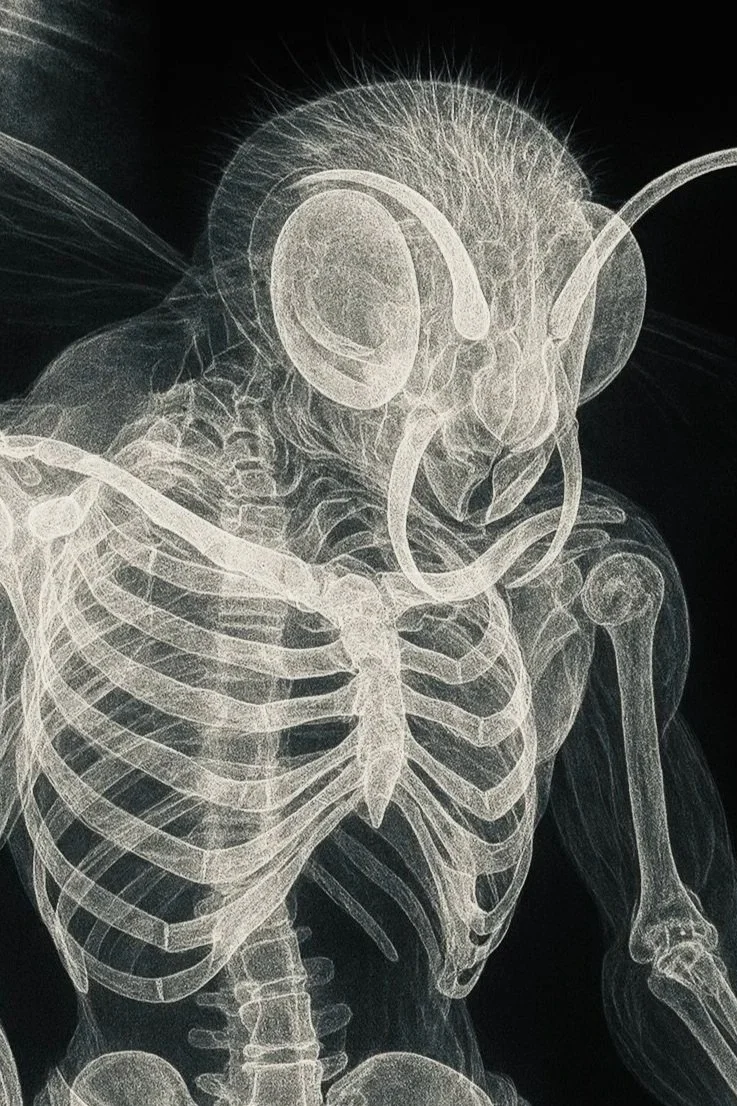
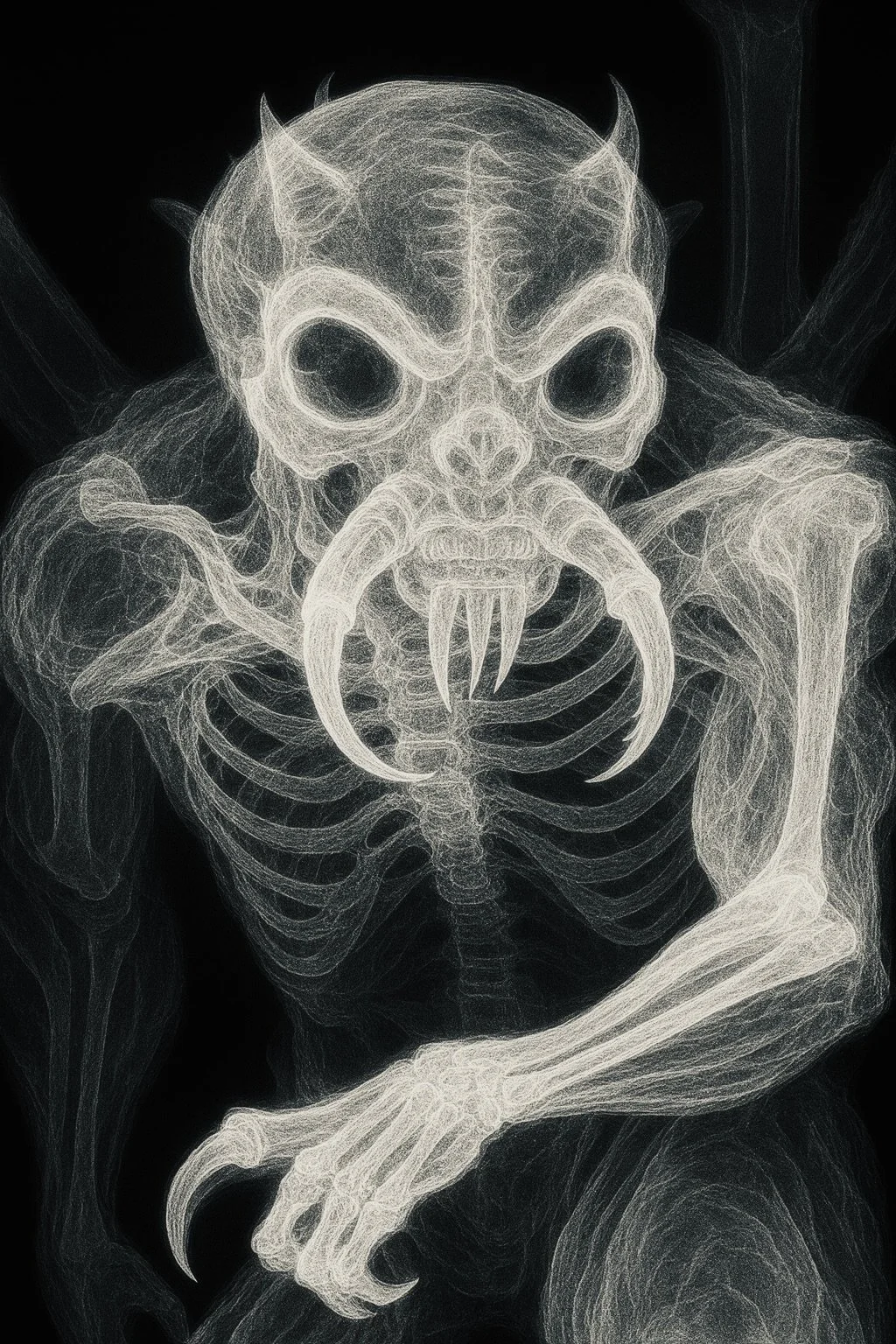
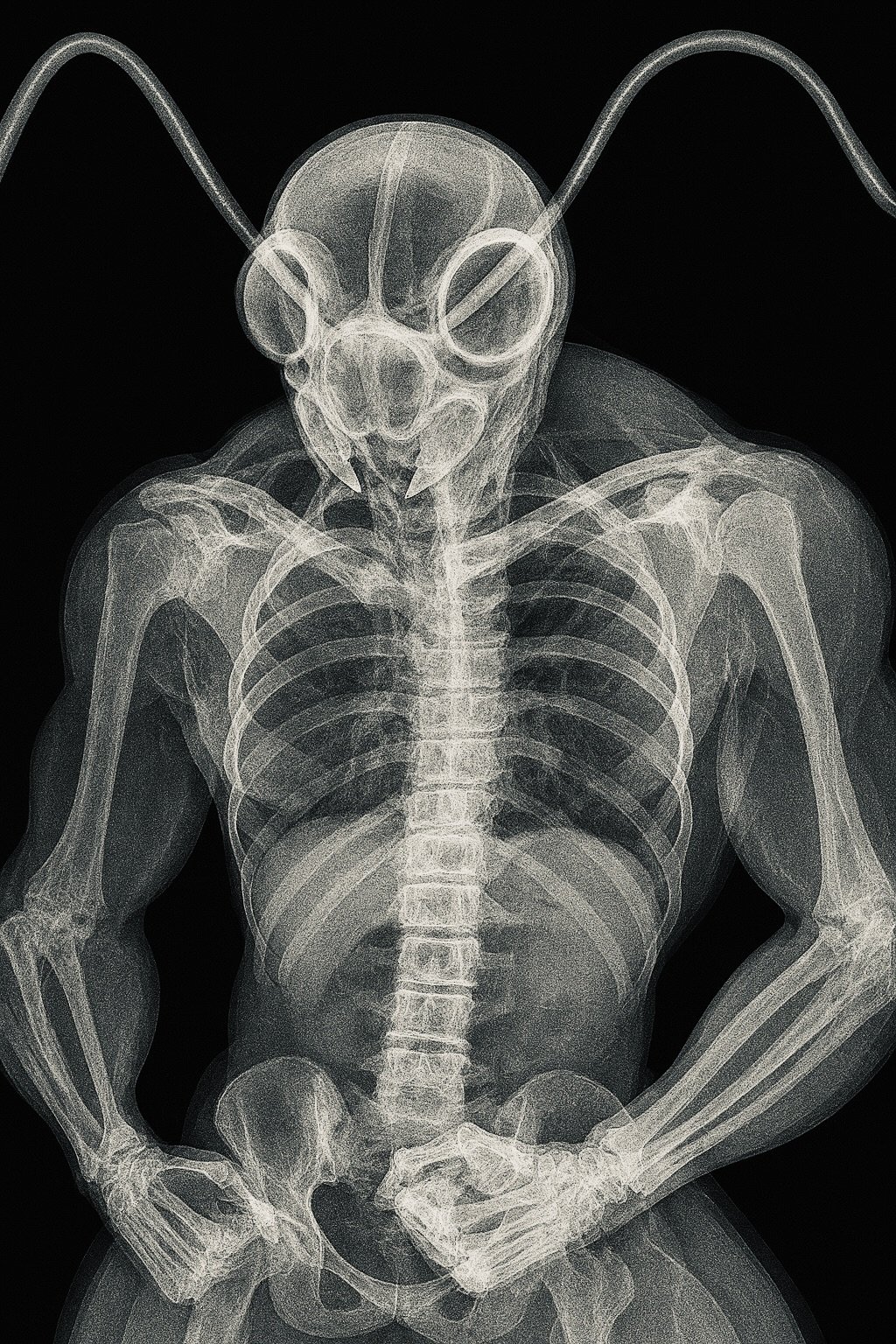
What happened next was buried so deep that no government will admit it existed. Subject 9 was moved to a reinforced ward: barred windows, iron doors, food passed through a hatch.
Within weeks, he was gone. But the ledger proves there were at least thirty attempts. Nine was only the first to survive long enough to trouble his makers. Eighteen more followed in the next three years. They were not uniform. Some barely lived beyond the first weeks, their bodies tearing themselves apart. Others lingered, grotesquely altered, minds intact but bodies collapsing into plates of hardened skin or bloated sacs of tissue. Several swelled to monstrous proportions, their torsos bulging with unnatural bulk, arms straining against restraints. The nurses whispered about “the strong ones” — muscle not for aesthetics, but for violence. But a handful stabilised. Subjects 11, 14, and 17 are described as “viable". Each represented a different answer to the same question: what happens when you let the insect blueprint overwrite the human one? And then there was Subject 20. The notes on 20 are sparse, fragmented: "Rapid chitinisation… aggression elevated… refuses sugar, prefers protein…" The next line is scrawled, almost illegible: "First staff casualty confirmed."
It began with disappearances. A technician, gone after night shift. A nurse, missing between ward rounds. Each time, the official explanation was mundane: transfers, resignations, family emergencies. But the staff knew the smell. That cloying, burnt-sugar sweetness that lingered after an “incident". The creatures were eating them. Not crudely — there were never bodies to find. What was left was residue, faint traces of proteins in the bedding, a thin film on the walls. They consumed people the way they consumed sugar water — efficiently, utterly, leaving nothing behind. What horrified the staff most was the preference. The creatures began to reject ordinary meals in favor of fresh human victims. They were adapting, tuning their hunger to the richest source available: us. Seabright’s testimony is blunt: “They were learning that we were food. Once they learned, there was no going back.” With each death, they grew stronger. The ledger entries shift in tone. Greeley’s handwriting becomes frantic. “Containment failing” and “they are learning faster than we can adjust” appear. In one place, written in the margin: “We made predators.”
On a storm-lashed night in 1956, Subjects 14 and 20 broke loose. Subject 14 moved with terrifying speed, scaling walls like a mantis. Subject 20 tore through reinforced doors as if they were plywood. Together, they slaughtered guards, orderlies, and anyone unlucky enough to be working late. The survivors described it less as an escape than as an eruption. The Institute became a feeding ground. Lights went out. Corridors echoed with that faint, insectile humming they made when agitated. In the dark, people vanished. By dawn, the place was a charnel house. Officially, it was recorded as a fire. The buildings were sealed, then demolished. The remaining staff were sworn to silence under threat of prosecution. But the ledger makes it clear: not all the creatures died there. At least two were unaccounted for. After the breach, there was no further debate. A joint task force arrived: British soldiers, American advisors, Soviet “observers.” Their orders were simple: eliminate every subject, recover every note, burn every trace.
Chlorine gas was pumped into the underground wards. The creatures resisted, their bodies clawing at reinforced doors, their voices a low, resonant buzzing that shook the vents. One soldier swore he heard words — not human speech exactly, but an imitation: “Father. Finish me.” But gas does not listen. What remained was unrecognisable: husks, shells, fragments of tissue. The soldiers dragged them out and drove them to incinerators. Seabright says the smell of burning sugar clung to the countryside for days. Dr. Greeley was taken into custody and vanished. The staff were dispersed, bound by secrecy oaths that lasted lifetimes. But the ledger survived — smuggled out, hidden, kept by Seabright until she no longer trusted herself to carry the burden.
The end of Seabright's letter has never left me: “Their deaths were not victories. They were put down like animals, yes, but there was always a moment where they looked at us. Not like beasts. Not like men either. But like something trying to understand why we made it suffer so much just to kill it.” She insisted that Subject 9 had died earlier, quietly, after refusing food. As though he had understood, better than his makers, that he was incomplete — a question that should not be answered. The ledger ends with a few final notes in Greeley’s hand: "We sought thrift, and made appetite. We sought resilience, and made predators. Not monsters — mirrors."
We live in an age still intoxicated by biology’s promise. Gene editing, synthetic life, enhancements whispered about in corporate labs. We like to think we are wiser than the 1950s. But I have read the ledger. I have held the plates. The insect-men of the Farthing Institute were not aberrations. They were prototypes. A glimpse of what happens when human ambition outpaces human wisdom. They were destroyed. But the idea — the hunger to improve on humanity by remaking it — was never incinerated.